
A conversation with Dr Corinna Ricasoli, Founder and Chief Research Officer, on why she built Archivitaly and how it works.
For collectors, dealers, museums, and research institutions, primary-source research is often the basis on which decisions are made. It informs acquisitions, cataloguing, conservation records, publication, and, where relevant, due diligence and restitution-related review.
Archivitaly is a specialist research firm supporting verifiable archival and bibliographic work in Italy and across Europe, with reporting standards designed for curators, advisors, legal counsel, editors, and research teams.
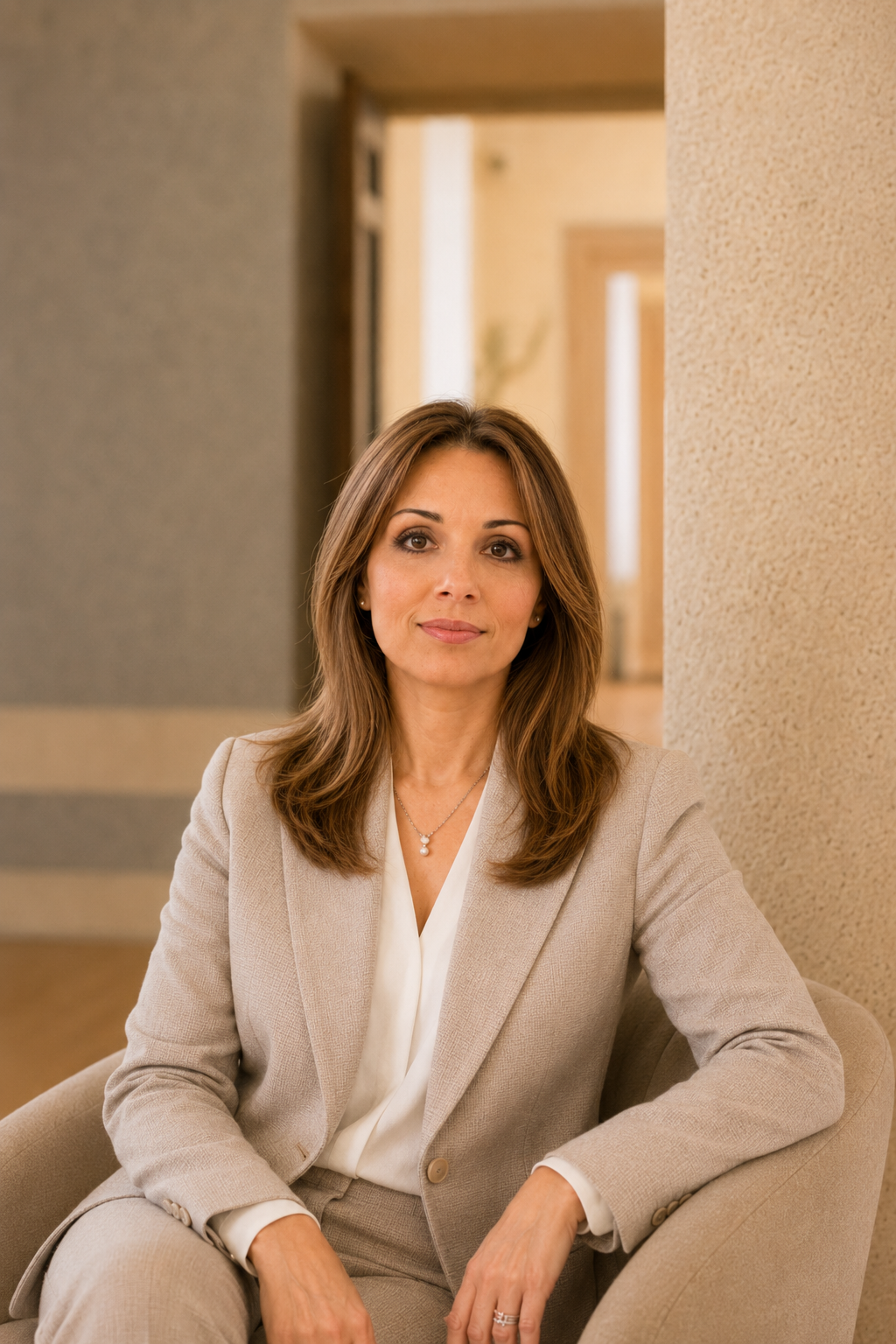
Dr Corinna Ricasoli, Founder & Chief Research Officer, Archivitaly.
Why did you build Archivitaly?
I built Archivitaly after years of seeing the same gap: strong research ambitions, but limited capacity to execute them properly. Italy and Europe offer extraordinary documentary depth, yet rigorous primary-source work is rarely compatible with modern schedules. Even highly experienced professionals cannot always commit to extended periods on site across multiple cities, institutions, and jurisdictions, especially when access procedures vary, cataloguing is uneven, and administrative friction is built into the process.
For international clients there is often a second barrier: language and script. Locating a record is one task; interpreting medieval and early modern hands, abbreviated legal formulae, and documents in Latin or local vernaculars is another. When those constraints compress projects into short visits, research loses the continuity that serious work requires.
Archivitaly was designed to make that work executable to a high standard without asking clients to relocate their lives to the archive. The pandemic accelerated acceptance of remote workflows, but the need existed long before. The core question has always been the same: how do you build a documentary trail that is verifiable, timely, and handled with discretion?
What were the earliest challenges, and how did you overcome them?
Trust is earned slowly in this field, and cautious clients are right to be demanding. They need assurance that research is not improvised: that references are verified, assumptions are stated, and every step is documented in a way that holds up outside the project team. That is why Archivitaly treats research as due diligence: careful scoping, disciplined documentation, and reporting designed to be usable by third parties, from curators and editors to advisors and legal counsel. In time, the work spoke for itself. Referrals followed, and they remain the most meaningful validation in this space.
Archivitaly works across Italy and Europe. How do you ensure quality and consistency?
Local expertise is indispensable, but method must remain consistent. As Chief Research Officer, I oversee every project from intake to delivery: feasibility, scope, priorities, verification steps, and final review for clarity and traceability. Clients have a single point of contact throughout, and communication is managed centrally.
Local expertise matters because Italy is not a uniform documentary landscape [as we explain in our Archival Research in Italy article, Ed.]. Historically, the peninsula was divided into states with distinct legal cultures and administrative habits. Those differences still shape what survives.
Even within the same record type, structure and terminology can vary considerably. Land and cadastral records are a clear example: the systems used in Rome are organised differently from those in Venice, and Venetian terminology is often specific to its own administrative history. The same applies to notarial documentation, where abbreviations, formulae, and conventions shift according to the historical state in which a record was produced. In many projects, regional language forms and dialect also become part of the evidentiary problem.
This is why experience in one city does not automatically transfer to another. A researcher who works confidently in Rome may not navigate sources in Venice, Florence, or Palermo with the same ease. Local expertise includes familiarity with today’s heritage institutions and access practices, but also with how historical institutions functioned and with the linguistic realities of the sources. We build teams accordingly: researchers anchored in specific geographic areas, working under shared standards and central oversight.
What does “method” mean in practical terms?
Method is what makes research predictable. It begins with a precise objective and defined constraints. We establish what is already known, what must be verified, and what a sensible first phase should test. On site, method means disciplined prioritisation and documentation: testing hypotheses against the sources, recording what was consulted (including negative results where relevant), and mapping any permitted images to exact references.
Method is equally evident in the deliverable. A professional outcome is not an unstructured folder of photographs. It is a structured report that preserves the documentary trail: references, summaries, images, and next steps presented in a form that can be checked and used.
What do clients receive, in practical terms?
Clients who commission research at a professional level need documentation that can travel: across advisors, legal counsel, curators, editors, and internal teams, without becoming ambiguous or unusable. The process begins with scope clarification and a detailed quotation aligned with access constraints and agreed deliverables. Research is then carried out in defined modules. After each module, clients receive a structured report designed for effortless cross-reference.
Each report includes an overview of findings to date, a list of sources consulted with full references, and concise item-level summaries for each relevant record. Where reproductions are permitted, images are numbered and mapped to the report so that every photograph can be matched to its corresponding entry.
Each module closes with a “next steps” section setting out options, priorities, and rationale. The purpose of this format is straightforward: to preserve a clear documentary trail that remains usable beyond the immediate project and across professional settings.
Provenance research is often mentioned. What does serious provenance work involve?
A rigorous reconstruction of the Nazi era is indispensable. It is central to assessing restitution risk, identifying potential claims, and meeting the ethical and legal expectations that shape museum practice and responsible market conduct. It must never be treated as a formality. At the same time, the Washington Principles on Nazi-Confiscated Art remain a widely cited reference point in this area.
At the same time, the most valuable provenance work rarely stops at a single period. In principle, the aim is to trace an object’s trajectory as far back as the sources allow, ideally from the artist’s studio to the present day, documenting changes of ownership, location, and context.
A provenance built across the longest possible arc strengthens due diligence by reducing unknown intervals. It can also increase cultural and market value by grounding the work in documented history: collection context, transmission pathways, and evidence that supports scholarship, cataloguing, and curatorial interpretation. Gaps are normal. The distinction lies in how they are handled: transparent documentation, verifiable links, and next steps designed to reduce uncertainty.
Can you share an example that reflects this approach?
Yes, with one limitation: confidentiality. Many projects involve private collections, advisors, or market-sensitive timelines, so I cannot share details that would identify a specific collection, transaction, or party. I can, however, describe the structure of the work.
In one case, the project began with a single document offering only minimal anchors: a city of origin and an importer’s name, with no complete ownership chain. The task was to establish a verifiable sequence. That required building documentary context, identifying the relevant series, verifying names and variants across multiple sources, and correlating fragmented references into a coherent trail.
The value was not only the discovery itself. It was the quality of the documentation: references that can be rechecked, a narrative supported by primary sources, and a clear account of what remains uncertain and what should be tested next.
Discretion is central to your services. How do you handle confidentiality?
We operate a double-blind model. Clients do not interact directly with the researchers conducting on-site work, and researchers do not receive client-identifying information beyond what is strictly necessary to execute the brief. The Chief Research Officer is the sole client interface, and all communication is managed centrally through that channel. Sensitive context is shared strictly on a need-to-know basis.
We do not publicise client lists, and we do not use identifiable case studies without explicit permission. Commissioned research remains private by default. Publication takes place only on the basis of explicit, written client instruction.
What do you decline?
We decline projects that cannot be executed responsibly or that fall outside our scope. This includes briefs that are too vague to define, requests that raise ethical concerns, and expectations that are unrealistic given access constraints, timelines, or the evidentiary nature of archival work. In many cases, however, the appropriate response is not to refuse the enquiry, but to reframe it. We may propose a narrower first phase, alternative source paths, or a staged approach designed to produce defensible progress.
We also define scope boundaries from the outset. Archivitaly does not provide genealogical research services. Our work focuses on archival, bibliographic, palaeographic, and provenance research where verifiable primary sources and professional reporting standards are essential.
What is your standard of proof?
We treat documents as evidence, not as conclusions. In practice, that means two things. First, we distinguish between what a source explicitly states and what it merely implies, and we record full references so that each point can be traced back to its documentary basis. Second, where a claim carries weight, we seek corroboration—across independent sources or within the relevant record group—and we flag uncertainty rather than smoothing it away. The aim is straightforward: a reader should be able to see what the documents say, where they say it, and what remains unproven at that stage.
How do you define scope and prevent scope creep?
We define scope in terms of questions, source classes, and time allocation. Each research module is built around specific targets and priorities. If new avenues emerge, we record them as options in the report and recommend clearly whether they should be pursued within the current module or deferred to a subsequent phase. This keeps the work predictable and preserves the integrity of the evidentiary trail.
What do you consider a “good” negative result?
A negative result has value when it is properly documented. If a relevant series has been consulted, logged, and ruled out, that information prevents duplication and narrows the field. In professional contexts, this can matter as much as a positive discovery, because it clarifies what can and cannot be supported by the evidence at a given stage.
How do you handle contradictory sources?
We treat contradictions as data, not as noise. When sources conflict, we document the discrepancy, verify the references, and look for the cause: identity confusion, shifting administrative terminology, copying errors, later summaries, or divergent documentary viewpoints. We then present the competing statements with their evidentiary basis, rather than forcing a premature reconciliation.
How do you work with legal counsel, curators, and market advisors?
We structure deliverables to be shareable. Clients often need to forward sections of a report to advisors, curators, editors, or legal counsel. Our documentation is therefore designed to be legible to third parties: clear references, transparent boundaries between evidence and interpretation, and a format that supports selective sharing without disclosing unnecessary sensitive context.
When do you recommend stopping?
We recommend stopping when further work is unlikely to change the decision. This may be the case when the relevant series have been exhausted, when access limits make additional progress disproportionate, or when the remaining uncertainty cannot be reduced with available sources. In those situations, we state the limits clearly and set out what would be required to move beyond them.
What does success look like after the first module?
Success means increased clarity. After the first module, clients should have verified references, a clear record of what has been consulted, an initial documentary trail, and next steps ranked by value and feasibility. Even when a final answer remains out of reach, the work becomes operational rather than speculative.
How is pricing determined?
Pricing reflects time on site, volume, and the expertise required to access and interpret the material. Complexity matters, but scale matters as well. A straightforward record type can still demand substantial time if the volume is large, if multiple units must be checked, or if the work involves extensive imaging and documentation.
Expertise is a further variable. Reading typed twentieth-century files is fundamentally different from working with medieval or early modern manuscripts, parchment deeds, or heavily abbreviated notarial material. Projects may require palaeographic competence, specific language knowledge, or familiarity with particular record systems and institutional practices. For that reason, work is priced in modules aligned with scope, access conditions, the skills required, and the deliverables agreed for each phase.
How do you handle attribution and historical claims in documents?
We present documentary facts without forcing interpretation. If an eighteenth-century source states that a seventeenth-century painting is by a particular artist, we record that claim with its reference and context. We do not treat the age of a document as a guarantee of truth. Historical sources can be mistaken, strategic, second-hand, or shaped by bias.
Our role is to extend the client’s research capacity: to locate, verify, and document the sources. Interpretation sits within the client’s curatorial, scholarly, or advisory framework. If interpretative support is requested, we can assist by analysing patterns across the documentation, while maintaining a clear boundary between what is stated, what is corroborated, and what remains a reasoned hypothesis.
How should a client start?
Share the reference you have, even if partial, and your objective in a single paragraph. We will respond with scope clarification and a detailed quotation, followed by a proposal for the first research module and its deliverables.
Riassunto in italiano
In questa intervista, Corinna Ricasoli, PhD, fondatrice e responsabile scientifica di Archivitaly, spiega perché ha creato il progetto: offrire ricerche in archivi e biblioteche in Italia e in Europa con metodo, standard elevati e riservatezza, per collezionisti, antiquari, musei e studiosi. Descrive un approccio basato su fonti primarie, verifiche e documentazione tracciabile, con consegna a fine modulo di una relazione strutturata e, quando consentite, immagini ordinate e numerate. Spiega inoltre perché l’esperienza sul territorio è decisiva: prassi, strumenti e tipologie documentarie cambiano da luogo a luogo e richiedono competenze specifiche. Infine, chiarisce le regole di riservatezza: un unico referente, comunicazione centralizzata e risultati resi pubblici solo su richiesta scritta del cliente.
Interview by the Archivitaly Editorial Team.


