
Archivitaly Conversations begins with the Archivio Storico Aldobrandini, the first instalment in a series devoted to archives, custodianship, and historical knowledge preserved in documentary collections. Private family archives seldom conform to the neat outlines of institutional history. As a category, they are often shaped by inheritance and dispersal, by dynastic continuity and extinction, by litigation, scholarly attention, transfer, memory, and the practical conditions under which documents can be preserved and consulted.
The Archivio Storico Aldobrandini, preserved in Frascati, offers a particularly rich example of this broader archival condition. Its holdings cannot be reduced to the history of a single family, nor even to the local history of the town over which the Villa Aldobrandini still looks. They open instead onto medieval diplomatics, papal Rome, artistic patronage, noble administration, estate management, ecclesiastical history, economic life, and the delicate ecology of private archival access. In this first conversation, Antonella Fabriani Rojas, Curator of the Archivio Storico Aldobrandini, reflects on the archive’s identity, its dispersal across different repositories, the parts of the collection that remain insufficiently explored, and the long, patient work through which an archivist becomes not merely a custodian of papers, but a custodian of connections between documents, researchers, and memory.
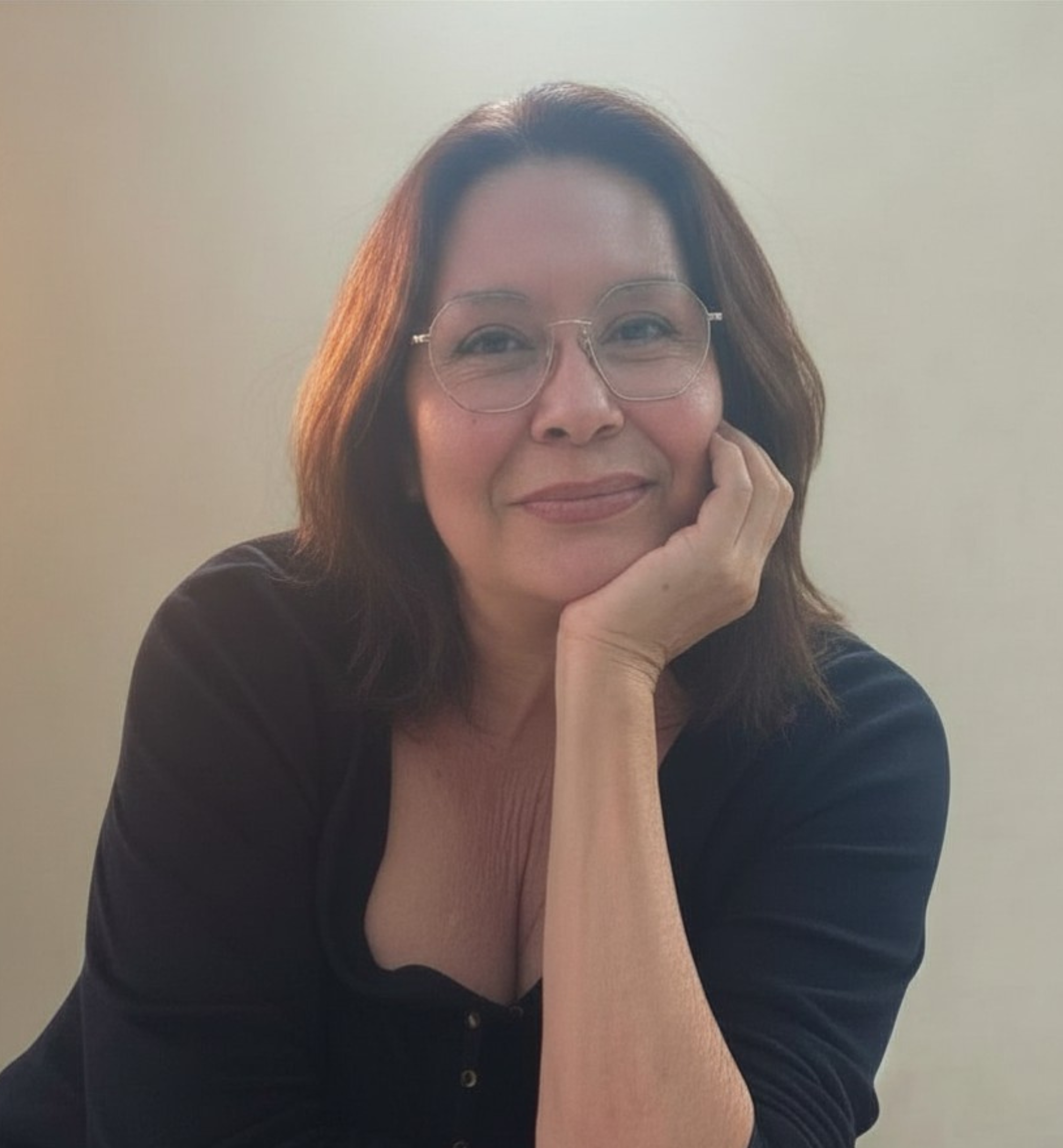
Antonella Fabriani Rojas, Curator of the Archivio Storico Aldobrandini in Frascati
How would you describe the identity of the Archivio Storico Aldobrandini today, and its role within the history of Frascati and the Aldobrandini family?
The archive’s importance lies less in its being the archive of a distinguished family than in the range of historical worlds that its documents make accessible. Among its most exceptional materials are the parchments relating to the Calabrian abbeys, including a substantial group concerning Santa Sofia in Benevento. Their scholarly life has been inseparable from their modern archival history. Deposited in the Vatican in 1939 for study and restoration, their temporary absence was gradually obscured by institutional and historical circumstances, including the deaths of key figures and the disruption of the war, before they finally returned to Frascati. Their return made possible renewed attention to a body of material that is extraordinary in both scale and character.
Another major reason scholars come to Frascati is the documentation connected with the artistic and collecting history of the family, particularly the collection of Cardinal Pietro Aldobrandini, a significant portion of which passed, through the history of family succession, into the Doria Pamphilj gallery. Yet the archive is not valuable only to historians of art. The account books of the principal family members are among its richest sources, because they record the practical fabric of aristocratic life with a density that formal narratives rarely preserve. They speak of property administration, artistic and architectural commissions, supplies of food and wine, stables, horses, carriages, medicines, and the many expenditures through which a household, a courtly identity, and an economic world were sustained. The inventories perform a related function for the seventeenth and eighteenth centuries. They allow us to reconstruct the nature, quantity, and location of goods in Rome and in the feudal estates, recovering material contexts that would otherwise remain largely invisible.
Its relationship with Frascati must be understood with some precision. The archive is not, in any substantial sense, an archive of the city. Apart from later administrative papers, especially those concerning the distribution of water from the Algidosia aqueduct, there is little that documents Frascati as an urban community. The Aldobrandini presence there was that of the villa, the extensive park extending towards Frascati and Grottaferrata, and agricultural and woodland holdings reaching as far as Artena. The Villa Belvedere dominates the landscape, but that monumental presence should not be confused with a civic or governmental archival role.
It is equally important to recognise that the archive is not complete. This incompleteness is the long consequence of succession history rather than of any modern archival choice. The Roman Aldobrandini line, created at the end of the sixteenth century, became extinct in the mid-seventeenth century, and its papers followed the lines of inheritance into the Borghese and Pamphilj families. When the Aldobrandini family was reconstituted at the end of the eighteenth century through the second-born Borghese line, after a long dispute over the inheritance with the Pamphilj, only part of the archive returned to the renewed Aldobrandini branch. Other papers, including important correspondence, had already entered other archival contexts. The result is a divided documentary inheritance, with Aldobrandini material now principally in Frascati, in the Vatican, and in Rome with the Doria Pamphilj. For research, this dispersal is not a secondary matter. It is one of the defining conditions of the archive.
What distinguishes the Archivio Aldobrandini from other family archives?
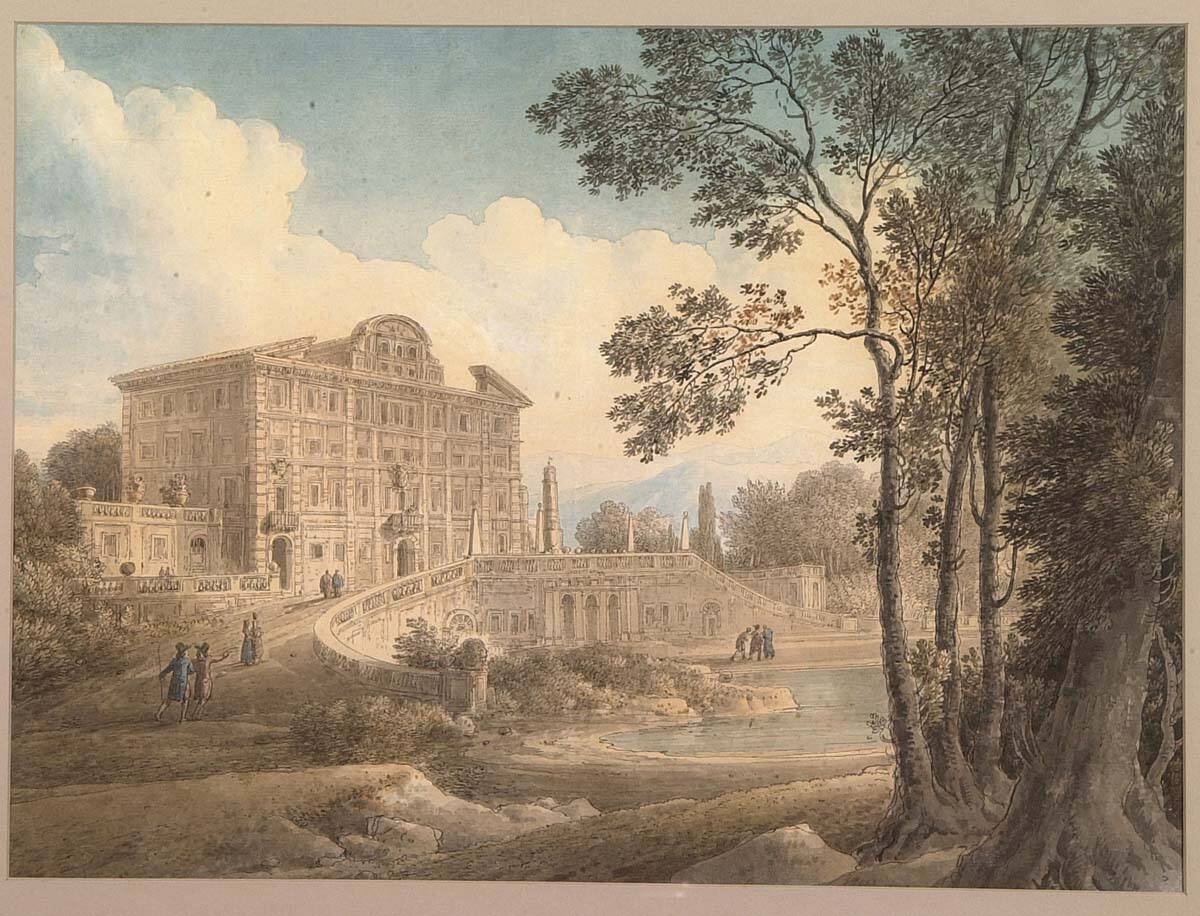
Jean Jacques de Boissieu, The Villa Aldobrandini at Frascati, 1793, pen and wash with watercolour washes. © The Nelson-Atkins Museum of Art.
In the Roman private archival landscape, the most distinctive feature is probably the degree of access that can be arranged for scholars. Consultation is organised in dialogue with researchers, and, as far as possible, days and hours are adapted to the practical requirements of their work. In private archives this is not a minor detail. Access often depends less on abstract rules than on the willingness to make research possible in concrete circumstances.
The archive’s policy on photography is also unusually supportive. With written permission, scholars may take photographs of documents free of charge, even when images are intended for publication. The condition attached to this is not commercial but scholarly: those who work on the documents are asked to deposit a printed copy of any resulting book and to send a PDF of articles or other research outputs. This requirement applies not only to those who photograph the documents, but more broadly to those whose work benefits from consultation. In this way, the archive retains a trace of the scholarship that its holdings continue to generate.
Are there documentary groups that, in your view, have not yet received the scholarly attention they deserve?
Several areas remain much less explored than one might expect. The documentation concerning the family’s older properties around Rome, many of which have now been absorbed into the modern city, has scarcely been requested for consultation. These are the kinds of records that may seem peripheral until one begins to ask questions about land, urban expansion, continuity of ownership, and the transformation of the Roman countryside into the modern city.
The feudal series also deserve sustained attention. Rossano in Calabria, and Sarsina and Meldola in Romagna, have attracted the interest of local scholars, but distance has often made systematic consultation difficult. In some cases researchers have identified specific items through the database of the Soprintendenza Archivistica and have requested information or photographs, but this is quite different from the sustained reading that such documentation would require. The material is still far from exhausted.
Ostia is a more encouraging case. In recent years that series has been studied more intensively by a researcher from the area who, after retirement, devoted considerable time to reconstructing the history of that territory. His work has produced publications and has been noticed by officials concerned with Ostia Antica and the surrounding archaeological area, although those who have drawn on the results have not necessarily come to examine the documents themselves.
There is also a complicated Florentine chapter. Part of the archive of the Florentine Aldobrandini, whose line became extinct at the end of the nineteenth century, was divided according to practices that would sit uneasily with present-day archival principles. Catalogues, registers, and correspondence came to Frascati, while other portions remained at the Archivio di Stato di Firenze, and still others are preserved by descendants in Tuscany, in a private setting that is difficult to consult. Such a division would be unlikely to be accepted under present archival principles, but at the time similar fragmentations occurred with some frequency. The result is that the researcher must often reconstruct the archive before even beginning to reconstruct the history.
A further difficulty is one of scholarly awareness. Because so much Aldobrandini material is also preserved in the Borghese and, above all, in the Doria Pamphilj archives, many researchers do not realise that Frascati may hold documents essential to their questions. The archive is therefore underused not because it lacks importance, but because its place within the wider documentary map is not always visible.
The Aldobrandini papers reach well beyond local history, intersecting with papal Rome and with families such as the Borghese and the Doria Pamphilj. Which documentary groups best express this wider dimension?

François-Marius Granet, Audience with Cardinal Aldobrandini in the Loggia of the Villa Belvedere in Frascati, 1822–1823. © Nationalmuseum, Stockholm.
One has to begin with an absence. The most important correspondence of the family members who played a major role between the late sixteenth and mid-seventeenth centuries is not preserved in Frascati. That absence shapes the way the archive is used. Researchers often come here not to find the principal series of political or family correspondence, but to locate documents that compensate for, illuminate, or partly fill the gaps left by those losses and dispersals.
The archive is particularly strong for the history of patronage in its material dimension: buildings, restorations, chapels, churches, palaces, painted decorations, and furnishings commissioned by the family. These records do not always allow us to reconstruct the social and political relationships of papal Rome in the way correspondence might, and it would be misleading to claim more than the evidence supports. Yet they are invaluable for understanding how patronage was translated into contracts, payments, objects, and spaces.
The testamentary series is another important point of entry into a wider world. Wills can reveal gifts to members of the family, as well as dispositions made by people connected to them. In some cases, these documents have not been found in the relevant notarial registers. The testamentary material relating to Lucrezia d’Este is a good example: one text was known only in part, and another remained unpublished until recently. Such cases show how a private family archive may preserve evidence that is unexpectedly absent from the repositories in which one might first look.
The thirty-eight volumes of Documenti Storici are perhaps the most revealing example of the archive’s broader reach. They contain administrative papers concerning Rome and papal possessions in Lazio, including contracts, accounts of the Annona, taxation, and concessions, alongside personal and institutional matters involving individuals connected with the family or with the Papal States. One finds material relating to bishops suspected of heresy in Eastern Europe, churches and dioceses across Italy, decrees and proclamations, the Legation of Ferrara, the struggle against the Ottomans, and the Priory of Malta at Albano Laziale.
The series is ordered, and the early twentieth-century card index, produced around 1915 and later digitised by the Soprintendenza, provides a preliminary subject structure. But it must be used with caution. The summaries are sometimes so brief that they do not reveal the real substance of the document, and dates or contextual information may have to be recovered from the document itself. Scholars who consult the digitised index elsewhere may arrive with long lists of references that prove, on inspection, not to correspond to the material they need. Conversely, documents of real importance sometimes appear in unexpected places, including in Documenti Storici when one would have expected them under a more specific series.
This is not a chaotic miscellany in the usual sense. It is ordered material. But for the researcher it can produce some of the same consequences: discoveries can be almost accidental, and the price of discovery is time. The archive rewards careful, patient, and sometimes lateral research.
The documents relating to water, aqueducts, and disputes with the community of Frascati seem to offer a very concrete history of power, resources, and daily life. What stands out most to you in these papers?
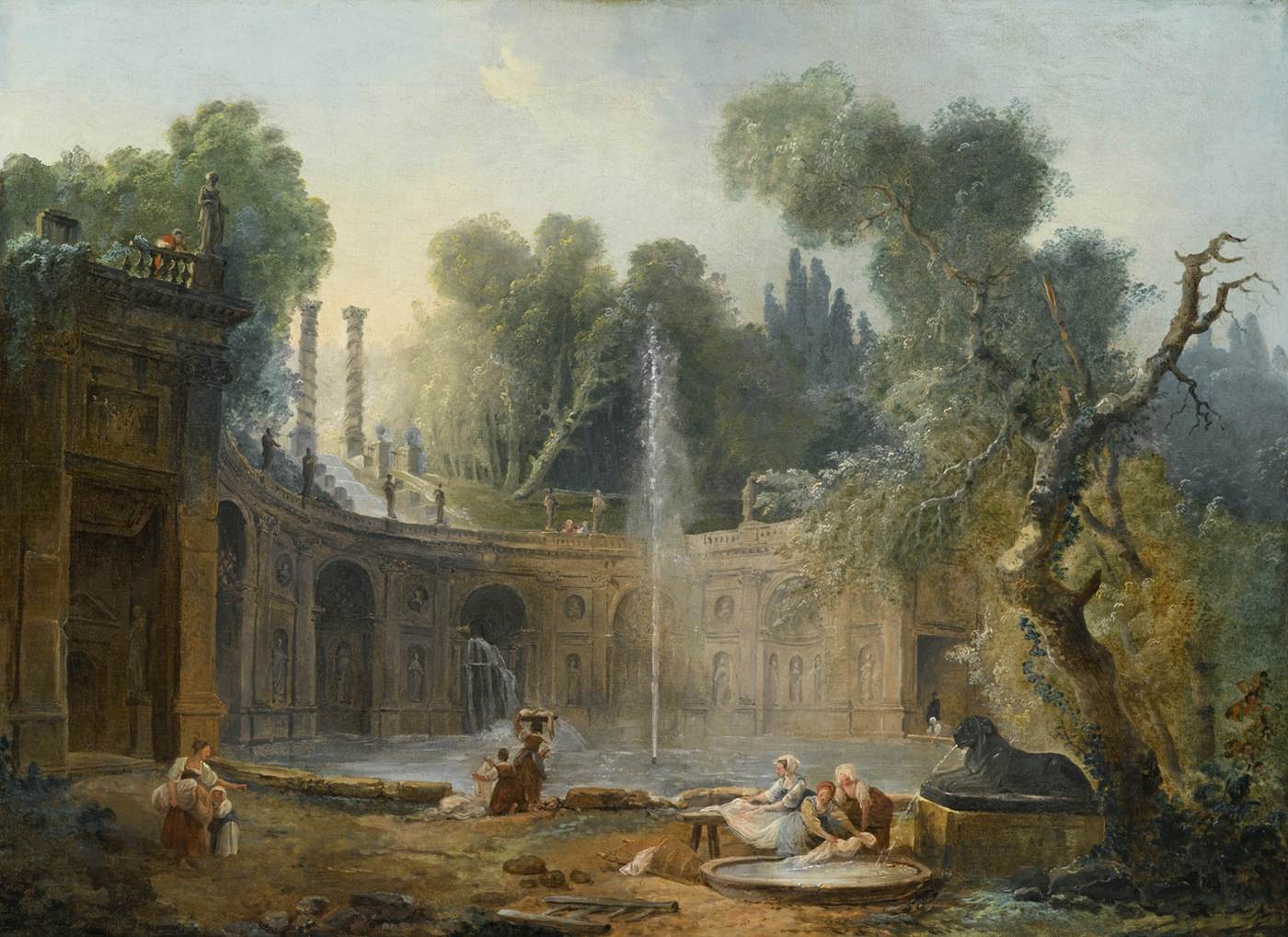
Hubert Robert, The Teatro delle Acque in the Garden of the Villa Aldobrandini, oil on canvas, private collection. ©WGA
The Algidosia aqueduct documentation is extensive, beginning with the excavation of the conduits in 1599 and continuing up to the present. It can certainly be important for questions concerning water, property, and local administration. Yet it would be wrong to overstate its centrality within the archive as a whole.
The disputes with the municipality of Frascati belong to a relatively limited period at the end of the nineteenth century, and for that subject the municipal archive offers richer documentation. In practical terms, these papers have attracted very little scholarly demand. In many decades of work, they have rarely been requested, and almost never by local researchers. Their interest is therefore likely to emerge from very specific questions rather than from a broad historiographical field.
Is there a document, parchment, register, or series to which you feel especially attached, either professionally or personally?
The parchments fascinate me most, especially those connected with the Hohenstaufen imperial chancelleries: Henry VI, Constance of Hauteville, and Frederick II. I would also include the Norman material associated with rulers such as Roger II, Robert Guiscard, and Bohemond. These documents bring one close to the political and juridical language of power in the medieval Mediterranean. The papal parchments of the same period are equally compelling, particularly where they reveal the tensions between imperial self-representation and papal recognition. In the case of Frederick II, one can see how titles claimed by the emperor might be questioned, or not acknowledged, by the Church.
My attachment to this series is also bound up with its modern history. Before the parchments were sent to the Vatican in 1939 for study and restoration, the records indicate the presence of gold seals. Those seals are no longer with the documents. After the deaths of both the Prince and the Prefect of the Archivio Segreto Vaticano (now Archivio Apostolico Vaticano, ed. note), and with the disruption caused by the war, the memory of the temporary deposit seems to have disappeared. The parchments were treated as if they had been donated and were stamped accordingly.
In 1992 I was able to secure their return to Frascati, without the intervention of the Soprintendenza, although it was aware of the situation. It was an unusual and delicate undertaking, not least because material of that nature and quantity does not normally leave the Vatican once it has entered its custody. The group comprises around 550 parchments dating from the twelfth to the sixteenth century. The gold seals are lost, apart from surviving wax seals, but the return of the parchments themselves remains one of the most significant episodes in the recent life of the archive.
What most surprises researchers when they visit the Archivio Aldobrandini for the first time?

Gaspar van Wittel, called Vanvitelli, View of Villa Aldobrandini, Frascati, c. 1700–1720, oil on copper. © Sotheby’s.
The first surprise is usually the place itself. A researcher enters the palace and discovers, from the archive windows, a view that opens towards Rome on one side and towards the Teatro delle Acque on the other. The setting can be so striking that first-time visitors sometimes have to be gently recalled to the purpose of their visit.
The second surprise is the atmosphere. The archive is not a large public reading room, and it rarely contains more than one or two researchers at a time, perhaps three. That changes the rhythm of work. There is no need for the rigid silence that governs many institutions. A scholar can ask a question aloud, stand up, stretch, make a telephone call, or pause without feeling that the entire machinery of a reading room has been disturbed. When someone spends a full day in the archive, lunch may take place in the loggia, with sandwiches, coffee from a thermos, and sometimes cakes brought by visitors.
This may sound incidental, but it matters. Research is difficult, and archival research is often solitary. Here, the archive can be lived as a working environment rather than merely endured as a place of consultation. Many scholars remember those informal lunches and breaks with real affection, precisely because they took place only a few steps from the documents they were studying.
Is there an aspect of daily archival work that remains largely invisible from the outside, but is central to the care of this archive?
What is least visible is often the curator’s memory. This is true of many experienced curators, especially those who have worked for decades with the same collections. The archive is not only a sequence of shelfmarks. It is also a web of past enquiries, unfinished research, unpublished findings, recurring questions, and scholars who may unknowingly be working on adjacent problems.
A curator who knows this history can sometimes create connections that no catalogue could produce. If two researchers have worked on related material, and if discretion permits, it may be possible to put them in contact with one another. This can lead to collaboration, clarification, or simply the exchange of views. But there is an ethical boundary that must never be crossed. I have never handed over to one scholar the unpublished work of another. At most, I may indicate published bibliography, or, with permission, provide contact details when a study has remained unpublished for many years.
For me, this is one of the strongest reasons why a private historical archive needs a curator who knows the papers intimately. The curator does not replace the inventory, but adds something that no inventory can supply: continuity of attention.
In the case of such a stratified private archive, what are the main challenges today in conservation, arrangement, description, and public value?
The question can be condensed into a single problem: the future of the papers. The following reflections concern the broader condition of private family archives in Italy, and should not be read as a comment on the present management of the Archivio Storico Aldobrandini, whose accessibility to scholars is one of its defining strengths. Archives of this kind often belong to noble families, and the social world that once surrounded them has changed profoundly over the last half-century. In many private archival contexts, rooms once guarded as part of family identity and historical memory may later be perceived through more practical pressures: space, cost, staffing, maintenance, or the difficulty of preserving an inherited documentary patrimony under changed circumstances.
Donation to the State is not always a simple solution. Public institutions may lack space, money, and staff. Material may be received but then remain in storage, awaiting arrangement for an indefinite period. Transfers may also create risks when archival materials are moved without adequate preparation, because disorder introduced at that stage can take years to repair. During that interval, scholars may be unable to consult precisely the material that most urgently needs to be stabilised and understood.
There is also the wider problem of private archives that are known to exist but remain inaccessible, or have never been formally identified and protected by the Soprintendenza. In some cases, publications have been produced from such archives, complete with shelfmarks and photographs, because a particular scholar managed to gain access. Yet in the broader landscape of private archives, a later enquiry may be met with denial, referral elsewhere, or indefinite postponement. The archive exists, but in practical terms it becomes invisible.
The matter is not only one of individual reluctance. The Soprintendenze themselves work under serious constraints of staffing and funding, and this has affected the cultural sector for decades. I do not believe the issue is recent. It is structural. Still, the effect is clear: important private archives may remain outside effective public knowledge, and when ownership structures, resources, or preservation conditions change, the risk to the documents increases.
Are there conservation, restoration, arrangement, or research projects that you consider especially urgent at this stage?
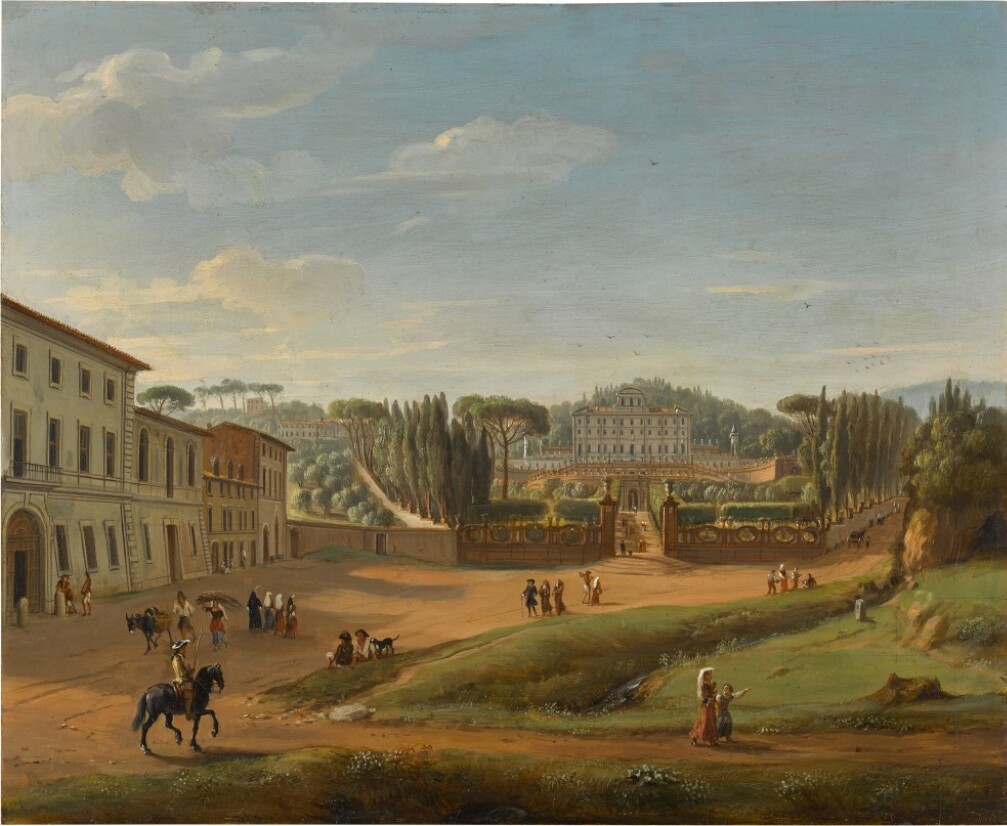
Gaspar van Wittel, called Vanvitelli, View of Villa Aldobrandini, Frascati, c. 1700–1720, oil on copper. © Sotheby’s.
There are no major conservation, restoration, or rearrangement projects in progress at the moment. The most immediate need is much more ordinary, but no less real: cleaning, especially the removal of dust, since the files are kept on open shelving.
There have, however, been significant scholarly projects in the past. One involved the palaeography course at the University of Tor Vergata. With the owner’s permission, the lecturer and students carried out a photographic campaign of the parchments, creating images useful for study and reducing the need for repeated handling of the originals. Another important project was undertaken by the Monumenta Germaniae Historica, with German palaeographers from several universities working on the Hohenstaufen imperial parchments. Their research was rewarded by the identification of a parchment that filled a chronological gap in the known production of Frederick II’s chancery, a sequence closely linked to the emperor’s movements.
In more recent years, consultation has been more limited in scope. For at least the last fifteen years, visitors have mainly been doctoral students working on art history, together with scholars who first came in the late 1980s and have continued to return whenever their work required it.
Some parts of the Archivio Aldobrandini continue to be cited by scholars working on the Middle Ages, ecclesiastical history, music, the arts, and patronage. How do you experience the relationship between material custody and scholarly reactivation?
Custody is never only material. Of course the documents must be preserved, ordered, and made available under appropriate conditions. But an archive truly comes alive through the questions that scholars bring to it. Researchers often share their hypotheses, their uncertainties, and the discoveries they make while working. For me this is a form of continuing education. What I learn from one scholar may later help another, and over time this exchange deepens the archive’s own capacity to respond to research.
That is why the results of scholarship are not external to the archive. They return to it, enriching the knowledge through which future readers can be guided. This has been one of the reasons I have continued to feel such passion for the archive since I began in 1988. To call it simply a job feels inadequate. It is a sustained relationship between documents, people, and historical intelligence.
What do you hope a researcher understands on leaving the Archivio Aldobrandini, not only about the documents, but about the world they preserve?
Researchers arrive with very different degrees of preparation. Some, especially when they are young or at an early stage in their training, do not yet possess the palaeographical or linguistic tools needed to work confidently with early documents. The difficulty is not only the script. It is the vocabulary, the formulas, the administrative habits, the legal assumptions, and the whole documentary culture that makes a text intelligible. There have even been cases of graduates unable to read Roman numerals. When this happens, the curator has to intervene, not to do the research for them, but to help them understand what kind of object they are facing.
Sometimes the problem lies further upstream. A researcher may insist on coming despite having been told, by telephone or in writing, that the proposed subject is not represented in the archive. In one case, the misunderstanding was as basic as confusing another family name with Aldobrandini. These situations are frustrating, but they also show how easily archival research can go wrong when the preliminary work has not been done carefully.
There are, fortunately, many more rewarding moments. A scholar finds the document that was being sought, or better still, encounters something unexpected that resolves a question. Those moments of intellectual excitement are among the great pleasures of archival work. In this archive, researchers generally leave satisfied not only because they have consulted documents, but because they have been accompanied in the process. They can request what they need without arbitrary numerical limits, work for long uninterrupted periods, and ask for guidance when necessary. For those who travel from far away and pay for travel and accommodation themselves, a full day of productive work can make an enormous difference. Their discoveries become, in a modest but real sense, my discoveries too.
If you could correct one misconception about family or private archives, what would it be?
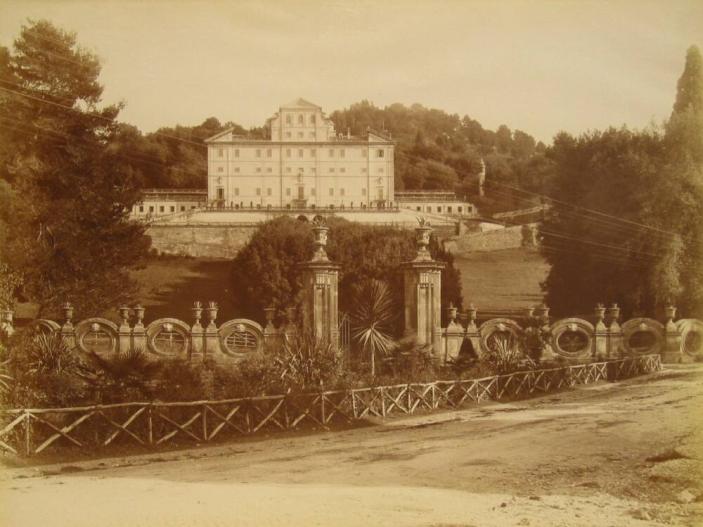
Romualdo, Leopoldo and Giuseppe Alinari, Frascati – Villa Aldobrandini vista dal Giardino Pubblico, 1850–1859, albumen silver print. Public Domain, Museum of Fine Arts, Houston.
I would correct the idea that archives are merely piles of old and useless papers concerning people long dead. This is not an abstraction; I have heard precisely that kind of phrase used. Anyone who thinks in those terms is unable to recognise the historical value of a family or private archive.
There is a related misunderstanding about truth and error in documents. Some people assume that if an old document contains inaccurate information, its value is diminished. But a document is evidence before it is a statement to be believed. Even a forged document produced in the past can be historically as important as an authentic one, because the forgery itself reveals interests, claims, conflicts, and legal strategies. The real historical question becomes why the false document was created, by whom, for what purpose, and with what consequences.
The archive itself contains examples of medieval falsification. More broadly, the Western tradition offers the most famous case of all: the Donation of Constantine, transmitted through influential canonical collections such as the Pseudo-Isidorian Decretals and Gratian’s Decretum. Its falsity did not prevent it from having immense historical effects. On the contrary, that is precisely why it matters.
Looking to the future, what form of public value is most appropriate for an archive like this: wider research access, public narrative, digitisation, or a different balance?
Digitisation would undoubtedly be one of the most useful paths, because it would make documents accessible to readers who cannot travel to consult them in person. It would also reduce some of the practical responsibilities borne by owners, who otherwise have to admit external researchers into private buildings and provide the personnel needed to accompany consultation, from the porter to the archivist.
But digitisation is not a neutral solution, because it touches economic questions as well as scholarly ones. In some private archival contexts, digitisation intersects with existing practices around reproduction fees, and a digital programme may therefore be perceived as altering an established balance. Yet researchers do not need images only for publication. Often they need them in order to transcribe, compare, and study documents after leaving the archive. Allowing study photography can actually reduce the time required on site, since the work of transcription and analysis can continue elsewhere. This practical advantage is not always recognised.
Access remains the larger issue. In some cases, consultation may be delayed or limited for a range of stated reasons: works in progress that last for years, lack of staff, or replies asserting that a document does not exist when the basis for that conclusion is not transparent to the researcher. These anxieties can be addressed by clear rules. A chronological limit can exclude recent administrative material. Historical papers need not be kept with current family records. No serious scholar expects to move through a private archive without supervision. The fear that a researcher’s interest in historical documents necessarily threatens present-day privacy or property management is often misplaced.
Digitisation also has a conservation value that should not be underestimated. Fire, flood, structural collapse, war, and other disasters can destroy documents suddenly. The loss of the Farnese archive in Naples during the bombings remains a grave warning for scholars. At that time, the technological means to preserve documentary access in another form did not exist. Today they do. A digital image does not replace the original, but it can preserve the possibility of reading when the original has been damaged or lost. For an archive like this, the future should therefore be a balance of controlled access, scholarly seriousness, and digital preservation, with the recognition that private documents may hold public historical value.
Further reading
Readers interested in how archival references are constructed may also consult Archivitaly’s article Archival Shelfmarks in Italy: A Practical Guide. For an institutional overview of the Aldobrandini family and related archival contexts, the SIUSA entry on the Aldobrandini family provides a useful point of reference.


