
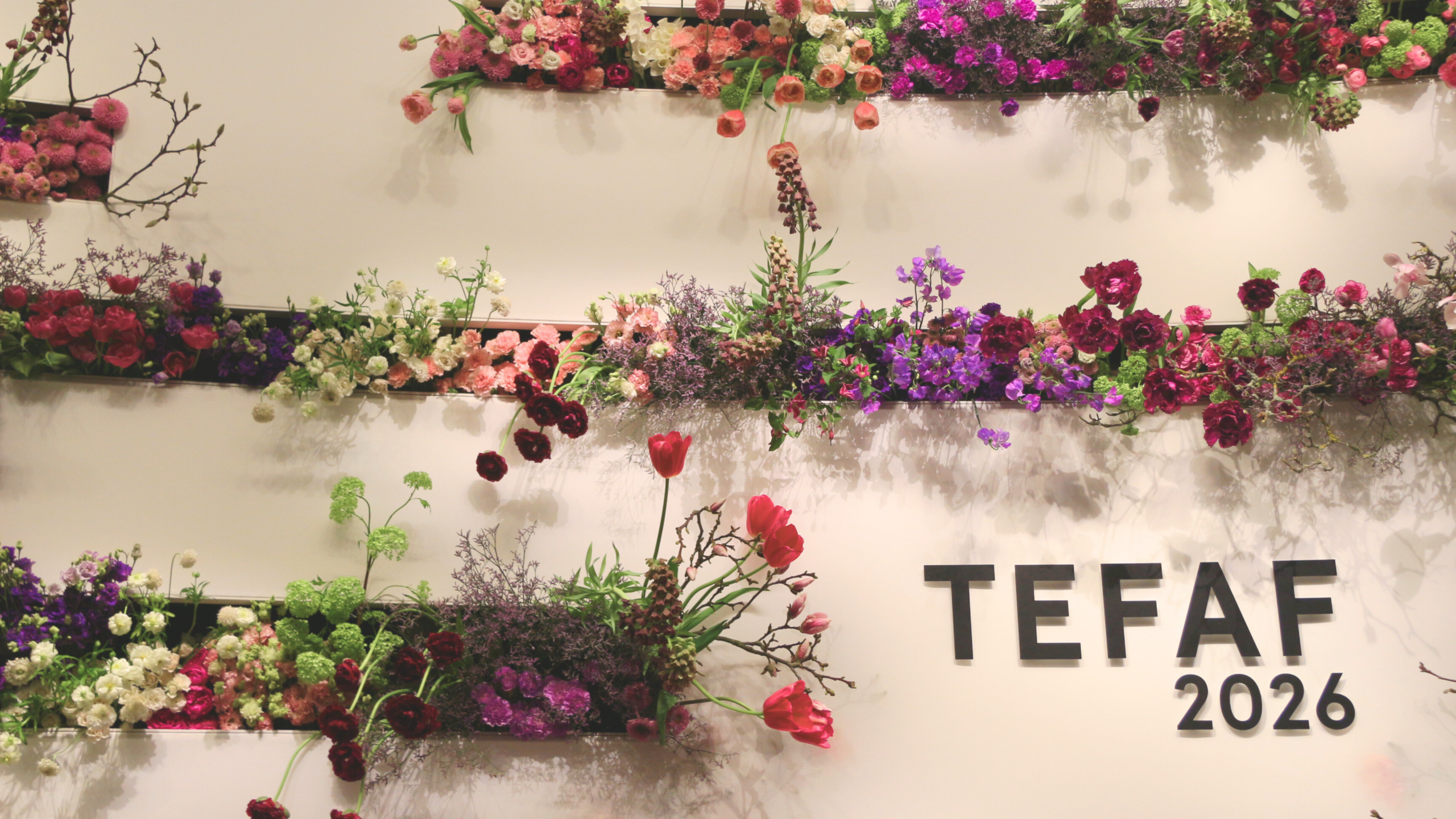
TEFAF Maastricht, during preview days, feels less like a fair and more like the art world’s annual summit. The flowers are immaculate, champagne circulates discreetly, conversations unfold over small plates and impeccably staged stands. It is chic without excess, international without noise. But beyond the surface elegance, something more consequential is happening: collectors fly in from across the world, curators and museum directors schedule meetings months in advance, advisors move briskly between stands, dealers reconnect with long-standing clients. Introductions are made, alliances are tested, plans are set in motion. For a few days, TEFAF becomes the go-to place for high-level networking in the art market, where collectors, museum professionals, and advisors come to see, assess, and acquire works at the highest level. At the centre of it all are works that span centuries: Old Master paintings, works on paper, sculpture, and refined objets d’art, each presented with effortless authority. Everything appears seamless; yet, as one moves more slowly through the aisles, another layer begins to emerge, not visual, but textual. Small labels that carry more weight than they first appear to: a line of provenance, a reference to a sale, a collection name, a date, a place; in a few words, a history is suggested. At this level of the market, provenance is expected. It situates an object within time, linking it to collectors, collections, and moments of transfer. But what is visible on the wall is, almost always, a condensed version of something larger. A provenance line may summarise decades—or centuries—of movement. Behind it often lie inventories, correspondence, estate papers, archival references, sale catalogues, and photographs that are not immediately visible, but that continue to shape the object’s history. This is where the difference emerges between what is listed and what is known.
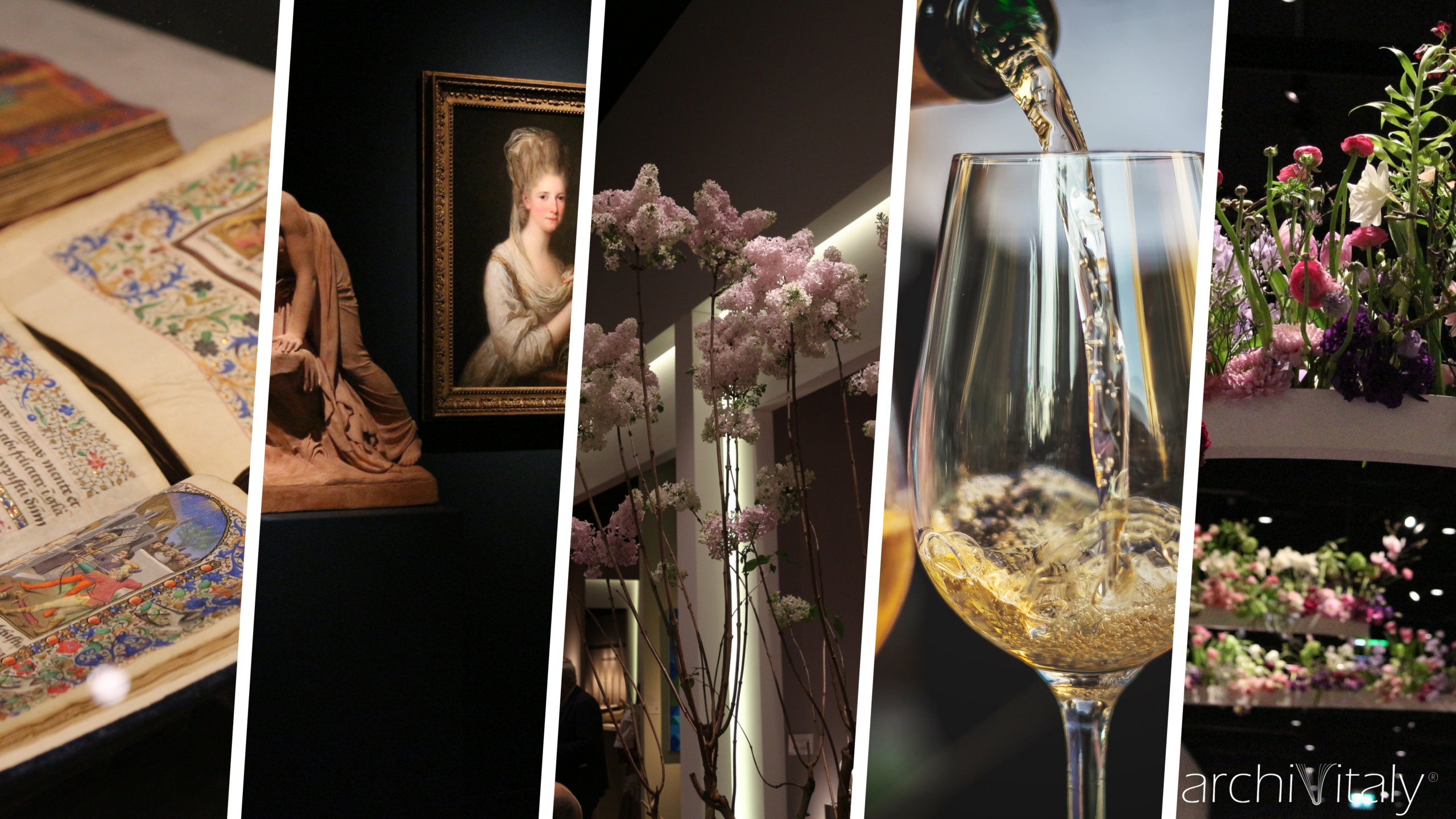
Art and atmosphere at the TEFAF Maastricht 2026 preview. © Archivitaly
For artworks and objects that have passed through Italy, that documentary landscape may include another layer: export authorisation. Italian cultural heritage law treats cultural property within a framework distinct from ordinary commercial circulation. Where export is permitted, it is typically accompanied by an authorisation issued by the competent Export Office—whether in the form of an Attestato di libera circolazione for movement within the European Union, or an export licence for destinations beyond it. In an international market, where objects move across borders and appear far from their place of origin, this layer is not always immediately visible. Yet it forms part of the broader documentary record of the work, alongside provenance and published references. When an artwork has an Italian history, understanding whether this element exists can be as relevant as reconstructing its ownership.
What becomes clear, spending time at TEFAF, is that the market operates on two levels at once: one is visible (the object, the display, the encounter), the other is quieter (the accumulation of references, records, and documentation that underpin confidence in what is being seen). That quieter layer is not always complete. Many works on display come with established provenance and recognised scholarship. Yet even at this level of the market, there are often elements that remain open: ownership histories that could be extended, references that could be deepened, archival material that has not yet been connected to the object. And beyond what is on display, galleries and collectors frequently hold works whose documentation is still partial, unpublished, or simply unexplored. This is not unusual. It reflects the nature of the field itself. Artworks move across collections, generations, and countries. Records disperse. Archives remain under-explored. Connections are lost and, sometimes, rediscovered. The documentary life of an artwork is rarely finished. For collectors and institutions, this is not a limitation. It is part of what makes the field dynamic. It is also where research becomes meaningful—not as a corrective, but as an extension. A way of adding depth to what is already known, of clarifying what remains uncertain, and of connecting objects to the wider networks of documents and sources that give them historical context. TEFAF, in this sense, is not only a place where artworks are presented at their most refined. It is also a place where questions begin quietly, often after the fair, when attention shifts from the encounter to the record.
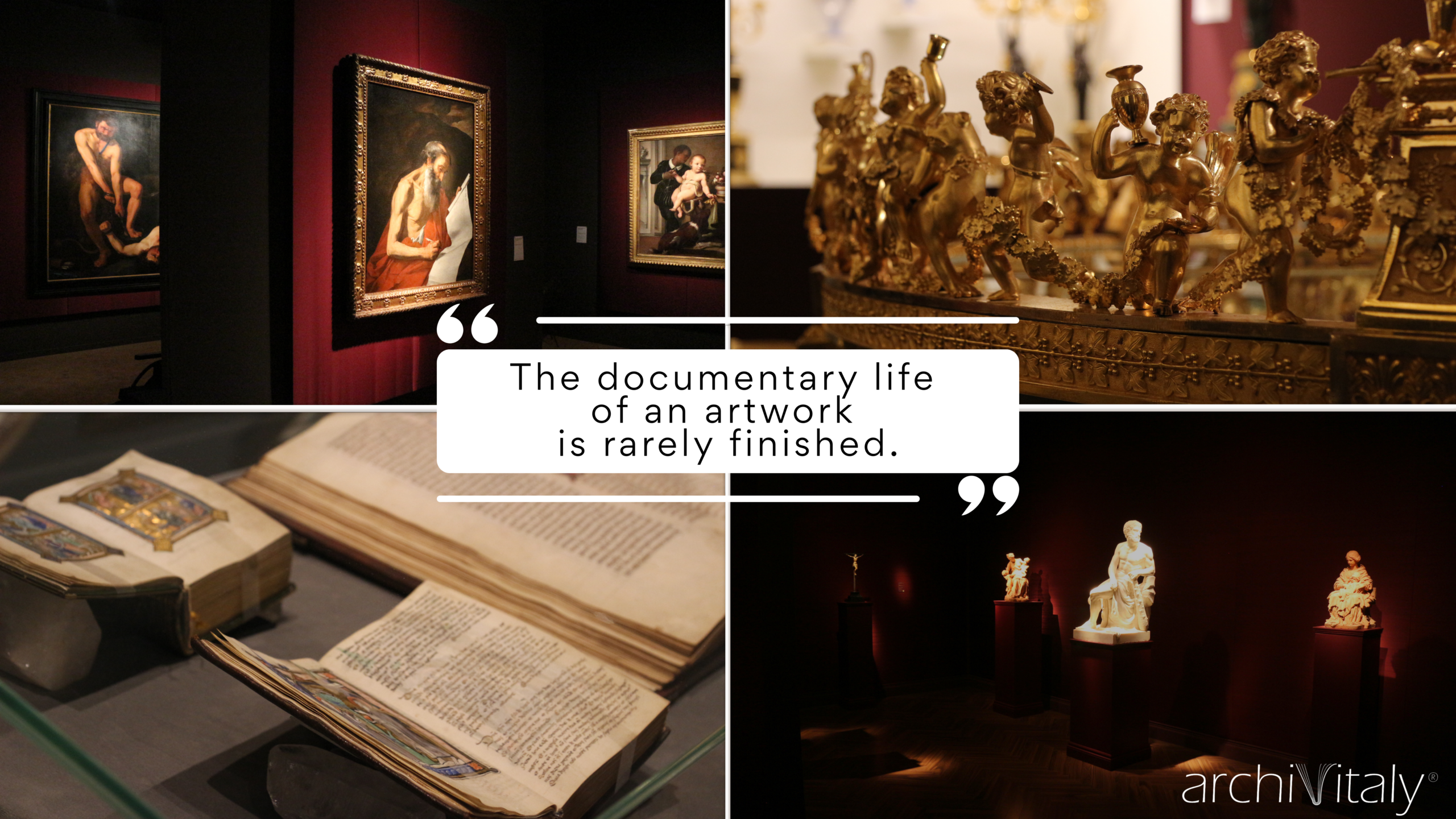
Old Master paintings, sculptures, and manuscripts at TEFAF Maastricht 2026 preview. © Archivitaly
For those who work with collections, this is where the next phase lies: tracing ownership histories beyond what is listed, identifying archival sources, reconstructing missing passages, and, where relevant, understanding the documentation that accompanied an object’s movement across borders. TEFAF may be where artworks are seen, compared, and acquired, but in many cases, what gives them their fullest meaning happens afterwards. In many cases, the most meaningful part of an artwork’s history is not what is already known, but what has yet to be connected. Archivitaly works with collectors, galleries, and institutions to extend and clarify the documentary record of artworks through provenance research, archival investigation, and the identification of sources that place objects within their wider historical context.


